The Quebec real estate investment landscape in 2026 looks meaningfully different from where it stood just a few years ago. Interest rates have stabilized after an extended period of volatility, rental demand in major urban and regional markets remains structurally strong, and a growing number of investors who paused acquisition activity during the high-rate environment are now re-entering the market with renewed focus.
For investors already holding one or two income properties, this is a compelling moment to think about what comes next. And for those building from scratch, the current environment rewards careful analysis over impulsive acquisition — with real opportunities available to those who know where and how to look.
This post is written specifically for investors thinking at a portfolio scale — multiple properties, coordinated financing, deliberate market selection, and a long-term view on how individual assets work together rather than in isolation.
Why Portfolio Thinking Changes Everything
Most real estate investors start with a single property and, if it goes well, eventually acquire a second. But there is a meaningful shift in approach that separates investors who accumulate properties opportunistically from those who build genuine wealth through deliberate portfolio construction.
The difference is in how you think about each acquisition — not as a standalone deal, but as a component of a larger system. A well-constructed portfolio has geographic diversification to reduce exposure to any single local market, a mix of property types and tenant profiles to balance risk, assets at different stages of their capital cycle to manage reinvestment demands, and a financing structure that allows continued acquisition rather than locking all available equity in a single asset.
In Quebec’s 2026 market, this portfolio-level thinking is more important than ever. Markets that were uniformly strong a few years ago are now showing more differentiated performance. Some municipalities are seeing sustained demand and price appreciation while others are softening. Investors who spread risk intelligently across markets and property types are better positioned than those concentrated in a single neighborhood or city.
Quebec’s Regional Markets in 2026: Where the Opportunity Is
Montreal remains the largest and most liquid real estate market in Quebec, and it continues to attract both domestic and international investor interest. However, cap rates in the city’s most established neighborhoods have compressed over the past decade, and the best returns available in 2026 increasingly require looking beyond the island.
Several regional markets deserve serious attention this year:
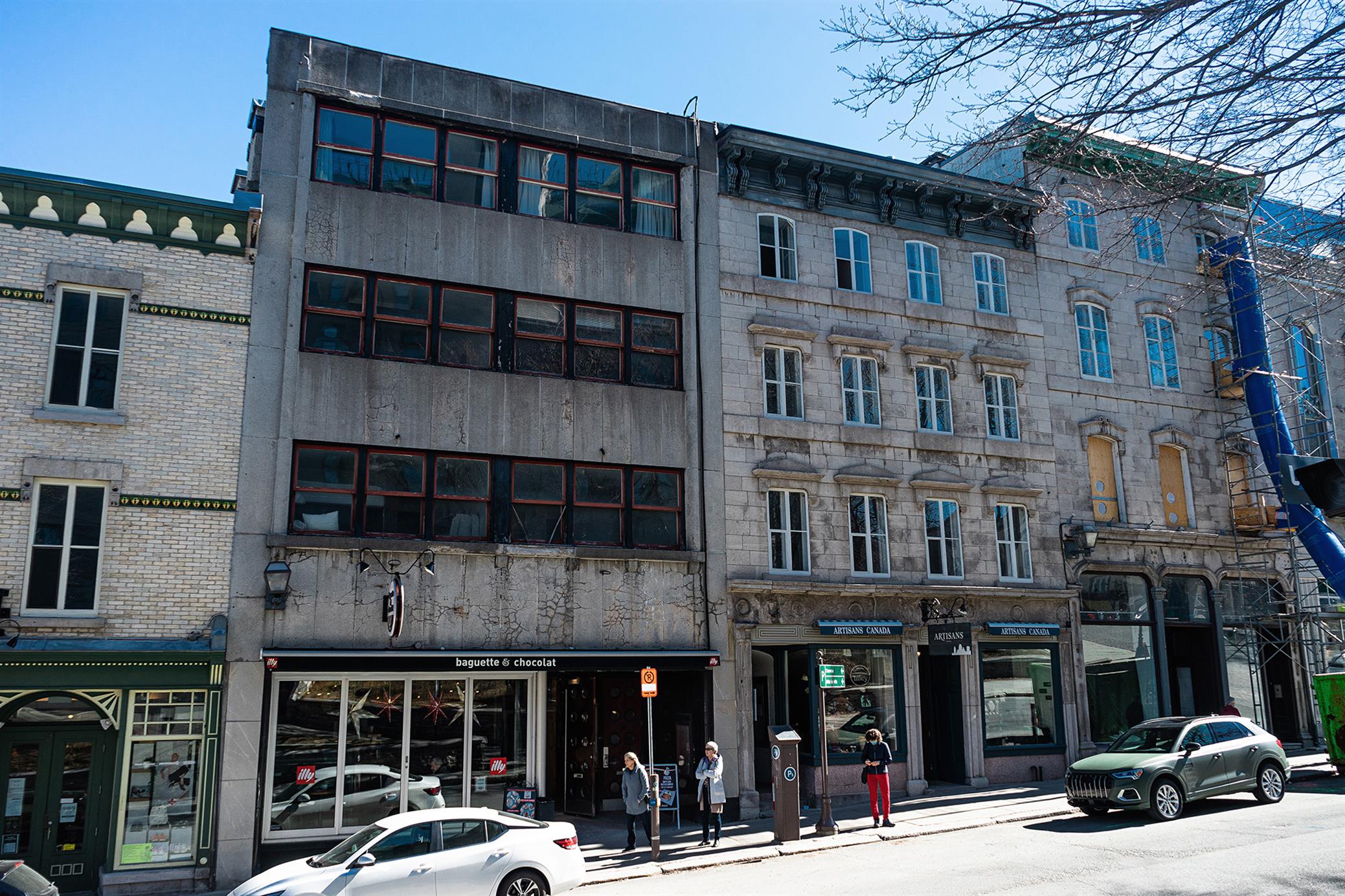
Quebec City. The national capital region has consistently maintained low vacancy rates and a stable economic base anchored by government employment, tourism, and a growing technology sector. Multi-unit properties in Quebec City’s established neighborhoods offer attractive entry prices relative to Montreal while delivering comparable rental demand fundamentals.
Sherbrooke. The Eastern Townships’ largest city has emerged as one of Quebec’s more interesting secondary markets for income property investors. A significant student population anchored by Université de Sherbrooke and Bishop’s University, combined with growing tech and manufacturing employment, sustains reliable rental demand across a range of unit types.
Gatineau. The proximity to Ottawa and a federal employment base creates a rental market profile that is unusually stable. Gatineau continues to offer multi-unit properties at price points that generate better cash flow metrics than comparable Montreal assets.
Laval and the North Shore. These markets serve Montreal spillover demand and have seen meaningful population growth as remote work flexibility allows residents to trade commute time for more space. Vacancy remains tight and new supply has not kept pace with demand.
Murray Immeubles maintains active market coverage across all of these regions, and Frédéric Murray Estates adds coverage of rural and estate-scale income properties for investors interested in larger-format acquisitions outside urban centers.
The Mechanics of Portfolio Financing in 2026
One of the most practical challenges of building a multi-property portfolio is the way financing constraints evolve as your holdings grow. Understanding these mechanics before you hit a ceiling is essential for keeping momentum.
The residential-to-commercial transition. Most investors begin with plex properties financed under residential mortgage rules. But once your portfolio grows — particularly once you cross certain thresholds of total outstanding mortgage debt or move into 5-unit-plus properties — residential lenders become less relevant and commercial lending becomes the primary tool. Commercial lenders evaluate income properties primarily on the cash flow the properties generate, not solely on the borrower’s personal income. This is actually an advantage for investors with strong rental income, but it requires clean financial documentation and organized rent rolls.
Leveraging existing equity. Investors who acquired properties several years ago have likely seen significant appreciation in their portfolio value. In 2026, accessing that equity through refinancing or HELOCs (where applicable) is one of the primary strategies for funding down payments on additional acquisitions without relying entirely on personal savings. The key discipline is ensuring that refinancing costs and increased debt service on existing properties do not erode the cash flow that makes the portfolio sustainable.
CMHC MLI Select for portfolio builders. For investors acquiring purpose-built rental properties of five units or more, CMHC’s MLI Select program continues to offer insurance premium advantages tied to commitments around energy efficiency, accessibility, or affordability. At portfolio scale, these premium differentials compound meaningfully across multiple assets and are worth structuring acquisitions around where possible.
Corporate ownership structures. Many Quebec investors with portfolios above a certain threshold hold properties through numbered companies or operating corporations. The tax treatment, liability protection, and estate planning advantages of corporate ownership are worth reviewing with a Quebec accountant and notary as your portfolio grows — though the right structure depends heavily on your personal situation and long-term goals.
Building a Portfolio Management System That Scales
Owning a single income property is manageable for most people on a semi-self-managed basis. Owning three, five, or ten properties across multiple municipalities is an entirely different operational undertaking.
Investors who try to self-manage at scale without systems and support typically end up in one of two situations: they become overwhelmed by the day-to-day demands of landlording and lose the bandwidth to continue acquiring, or they let operational standards slip in ways that ultimately damage the value of their assets.
The investors who build the largest and most successful Quebec portfolios almost universally share one characteristic — they build professional management infrastructure early, before it becomes a necessity driven by crisis rather than strategy.
In 2026, professional property management is not the cost center it might appear to be on a basic income statement. A competent management team reduces vacancy through faster unit turnaround, reduces maintenance costs through proactive building care, reduces legal exposure through TAL compliance, and frees the investor’s attention for the highest-value activity: finding and evaluating the next acquisition.
Frédéric Murray Management provides portfolio-level management services for Quebec income property investors, with the operational depth to handle multi-property, multi-municipality portfolios in a coordinated way. For investors who want to explore specific markets through the rental side before committing capital, Frédéric Murray Rentals offers market-level insight that complements the acquisition process.
What a Strong 2026 Portfolio Acquisition Looks Like
In practical terms, the income property acquisitions that are making the most sense for portfolio builders in Quebec’s 2026 market share several characteristics:
They are purchased at a price where the current in-place income — not projected or potential income — covers debt service with a meaningful buffer. Deals that only pencil out on the basis of future rent increases or vacancy assumptions significantly below the market average carry risk that is not appropriate for investors building at scale.
They have manageable deferred maintenance — capital requirements that are identified, costed, and factored into the purchase price, rather than discovered post-closing. Every dollar of unplanned capital expenditure in year one erodes the return profile of an acquisition.
They are in markets with demonstrable rental demand supported by employment diversity, population growth, or institutional anchors — universities, hospitals, government centers — that create durable tenant pools independent of any single employer.
And they fit the broader portfolio — adding a market, property type, or tenant profile that diversifies rather than concentrates risk.
Taking the Next Step in 2026
Quebec’s income property market in 2026 rewards investors who combine market knowledge with financial discipline and operational sophistication. The conditions that make this an interesting acquisition environment — stabilized financing costs, differentiated regional performance, and growing rental demand across multiple markets — will not persist indefinitely.
Investors who move deliberately and intelligently this year will look back at 2026 as a year that made a material difference in their long-term portfolio trajectory.
Murray Immeubles works with income property investors across Quebec at every stage of portfolio development — from the first multi-unit acquisition to complex multi-market expansions. Connect with the team to discuss how your portfolio goals align with what the 2026 market has to offer.