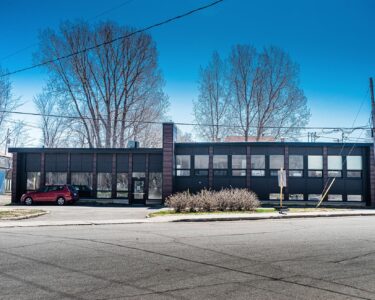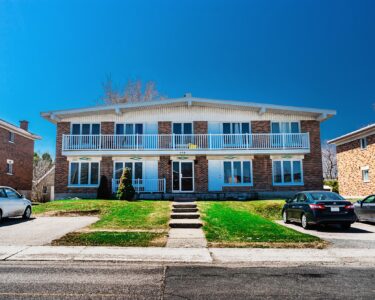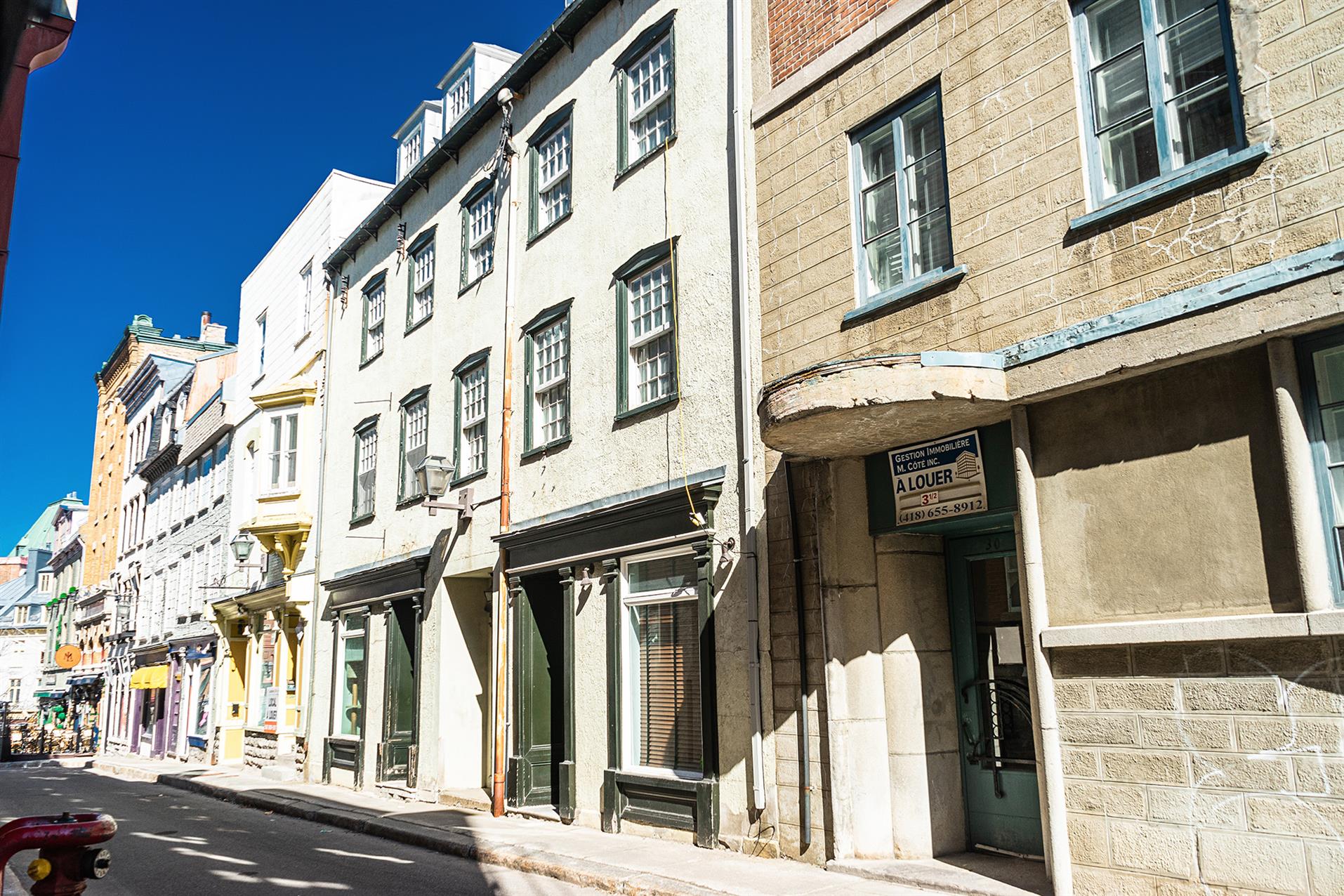
Quebec has long been one of the most investor-friendly real estate markets in Canada for multi-unit buildings. A culture of renting, a dense urban population, tight vacancy rates in major cities, and a well-established legal framework around tenancy all combine to create conditions where a well-purchased income property can deliver reliable returns for decades.
But the operative phrase is well-purchased. The Quebec multi-unit market rewards investors who do their homework and punishes those who move on instinct alone. At Murray Immeubles (murrayimmeubles.com), we work with investors at every level — from buyers acquiring their first duplex to clients assembling portfolios of six, eight, or twelve-unit buildings. This guide lays out what separates investors who build genuine wealth through Quebec real estate from those who find themselves stuck with a property that underperforms year after year.
Why Quebec’s Multi-Unit Market Attracts Serious Investors
The fundamentals driving Quebec’s rental market are not complicated, but they are durable. Montreal’s rental vacancy rate has remained consistently low, particularly for units in desirable neighborhoods and in the affordable-to-mid-range price band that makes up the majority of Quebec’s rental stock. Quebec City tells a similar story — a stable employment base anchored by government, education, and healthcare creates steady rental demand across all unit types.
Population growth, immigration, and the ongoing affordability gap between renting and owning continue to support strong occupancy across the province. These are not short-term trends. They reflect structural features of Quebec’s housing market that have been consistent for decades and show no sign of reversing.
For investors, this translates into one key advantage: vacancy risk is relatively low compared to many other Canadian markets. A well-maintained, well-managed building in a good location in Quebec does not sit empty. That predictability of income is the foundation that makes multi-unit investment in this province so attractive.
Building a Strategy Before You Buy a Single Property
The investors who consistently outperform in Quebec real estate are not necessarily the ones who find the best individual deals. They are the ones who operate with a clear strategy before they ever make an offer.
Before entering the market, define the following for yourself with honesty.
Your investment horizon. Are you building a long-term hold portfolio, or are you looking to add value and refinance within three to five years? The type of property you should target, the neighborhoods you should focus on, and the price points that make sense all shift significantly depending on your answer.
Your financing capacity. Multi-unit buildings above a certain threshold — typically five units or more — are treated as commercial properties by most lenders, which changes the financing terms, the required down payment, and the underwriting criteria. Know your financing ceiling before you start shopping. Surprises at this stage cost deals.
Your management approach. Will you self-manage, or will you use a professional property management firm? Self-management maximizes cash flow but demands time, availability, and a working knowledge of Quebec tenancy law. Professional management costs money but removes the operational burden entirely. There is no universally correct answer — but you need to decide before you model the numbers on any deal.
Your risk tolerance. Some investors prefer stabilized assets with long-term tenants and predictable income, even at the cost of lower upside. Others pursue value-add opportunities — buildings with below-market rents, deferred maintenance, or poor management — where the return potential is higher but the execution risk is real. Know which investor you are.
How to Evaluate a Multi-Unit Investment in Quebec
Every property analysis starts with the same set of numbers. Here is how experienced investors approach it.
Current versus market rents. Quebec’s rent regulation system means that rents in long-occupied units are often significantly below what the market would bear for a vacant unit. The gap between in-place rents and market rents is called the rent upside — and it is one of the most important factors in evaluating a value-add acquisition. Understand clearly what the building earns today and what it could realistically earn as units turn over and are re-leased.
Expense verification. Never accept a seller’s stated expenses at face value. Request actual municipal tax bills, insurance invoices, utility statements, and maintenance records for the past two to three years. Sellers have an incentive to present expenses at their lowest. Your job is to reconstruct what the property actually costs to operate.
Capital expenditure reserves. A building’s NOI looks better when capital expenses are ignored — but roofs, boilers, windows, and parking surfaces all have finite lifespans. Model a realistic capital reserve into your analysis. A property that cash flows positively before capex but negatively after it is not the deal it appears to be.
Financing stress testing. Run your numbers at current interest rates and then rerun them at rates one and two percentage points higher. If the deal only works in a narrow rate environment, it is a fragile investment. Strong deals hold up under a range of scenarios.
Neighborhoods and Property Types Worth Targeting
Not all Quebec neighborhoods perform equally as investment markets, and not all building types suit every strategy.
In Montreal, the Plateau-Mont-Royal, Rosemont, and Villeray sectors have historically delivered strong appreciation alongside reliable rental demand. These are established neighborhoods with low vacancy, high tenant quality, and consistent buyer interest when properties come to market — which supports exit values if you eventually sell. The trade-off is entry price: these neighborhoods command a premium, and gross revenue multipliers reflect it.
For investors prioritizing cash flow over appreciation, emerging neighborhoods in the north and east of the island — Montréal-Nord, Saint-Michel, Anjou — can offer better income-to-price ratios, though they carry more management intensity and require a longer investment horizon to realize appreciation.
On the South Shore, municipalities like Longueuil, Saint-Hubert, and Brossard offer a different profile: slightly lower acquisition costs, strong family rental demand, and good infrastructure. Investors building their first portfolio often find the South Shore easier to manage than dense urban Montreal.
In Quebec City, the Limoilou, Saint-Roch, and Beauport sectors have attracted growing investor interest as the city’s population and rental demand have expanded. Entry prices remain more accessible than Montreal across comparable building types, which supports stronger initial cash-on-cash returns.
Scaling from One Building to a Portfolio
The investors who build meaningful wealth in Quebec real estate are not those who buy one building and stop. They use the equity generated by their first acquisition to finance the next one, and the one after that. This is not a complicated concept, but executing it requires discipline and patience.
The refinance-and-reinvest cycle works as follows. You purchase a building, stabilize or improve it over two to four years, and then refinance based on the higher appraised value. The equity you pull out becomes the down payment on your next acquisition. Repeat.
What makes this work in Quebec’s multi-unit market is the reliability of the income stream. A well-managed building with stable tenancy generates the cash flow that services the debt through market cycles, even when you are waiting for the right moment to refinance or sell.
The key discipline is not over-leveraging early. Investors who take on too much debt in pursuit of rapid portfolio growth find themselves with insufficient reserves when a major capital expense hits unexpectedly. Build conservatively, generate cash flow, and scale from a position of strength.
What Murray Immeubles Brings to Your Investment
Finding good multi-unit investment properties in Quebec requires more than browsing listings. The best deals in this market move through networks — agents who know which owners are considering selling before a property ever hits MLS, investors who surface off-market opportunities through relationships built over years.
At Murray Immeubles (murrayimmeubles.com), we are embedded in that network. We work with buyers seeking their first income property and with experienced investors acquiring their tenth. In both cases, our value is the same: we bring deal flow, analytical rigor, and market knowledge that allows you to act with confidence when the right opportunity appears.
For investors who want professional management of their acquired properties, Frédéric Murray Management (fredericmurraymanagement.com) provides comprehensive landlord services — tenant screening, rent collection, maintenance coordination, and TAL compliance — so your portfolio generates income without consuming your time. For buyers focused on single multi-unit acquisitions rather than portfolio building, our sister platform Murray Immeuble (murrayimmeuble.com) is tailored specifically to that transaction.
If you are serious about building wealth through multi-unit real estate in Quebec, visit murrayimmeubles.com and connect with our team. The right building, bought at the right price, with the right structure, is one of the most reliable investments available in this market — and we know how to find it.